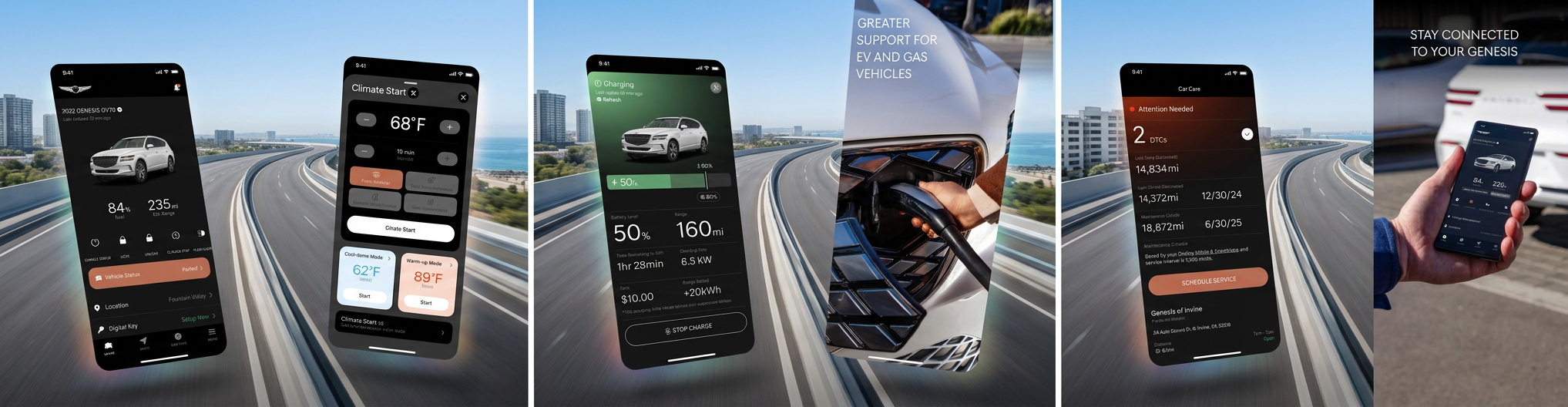
Genesis’s Service Valet program was underutilized, so we set out to deliver user-centered recommendations to make it a gold-standard experience. After auditing the existing website and app and interviewing stakeholders, we ran seven in-person focus groups across three cities with 24 owners and 24 non-owners, then synthesized the findings into a prioritized map of future-state opportunities. Most customers saw little value in the service, often because they were unaware of it, but responded well to a low-cost subscription with simple perks. Dealerships were open to models that drive more engagement, and brand perception of quality, price, and selection mattered far more to purchase decisions than time spent in the service department.
STEP 1: RESEARCH PREPARATION
Audit: Current website and app, review existing Genesis research and other supporting materials, conduct initial stakeholder interviews
Output: Refined research next steps for who we wanted to talk to and how we’d approach the research methodology
STEP 2: OBSERVATIONS & IN-PERSON FOCUS GROUPS
Conduct: Focus groups across 3 cities, 7 in-person sessions, 24 Genesis consumers, and 24 non-consumers.
Output: UX assessment & journeys demonstrating the current state of the program’s owned assets.
STEP 3: FUTURE STATE MAPPING
Synthesize: Current digital experience, stakeholder interviews, system assessment and research data from focus groups.
Output: Mapping of synthesized future state opportunities and prioritization exercise.
INSIGHTS
Despite the service valet experience being part of ownership, most Genesis customers didn’t see value in it or use the service. Some customers cited the reason being they weren’t aware of it. In discussions with customers, the idea of Service Valet being a subscription service with additional relatively easy and low-cost perks, was more appealing. In essence, value was tied to paying a small fee based on greater knowledge of the details of the service. In addition, most dealerships operated under the traditional model of customers bringing their vehicle in when needing service, but were open to a business model that drove greater engagement; bottomline, brand awareness of quality, price and selection were greater motivator for customers when considering purchase and spending time at the dealer’s maintenance department was irrelevant to conversion.


RESULTS
UX assessment was mapped to the consumer journey of owned assets. Opportunity recommendations were visualized to drive a more engaged enterprise understanding and acceptance. Opportunities were also prioritized on a road map based on our recommendations and collaborative sessions with Genesis stakeholders.